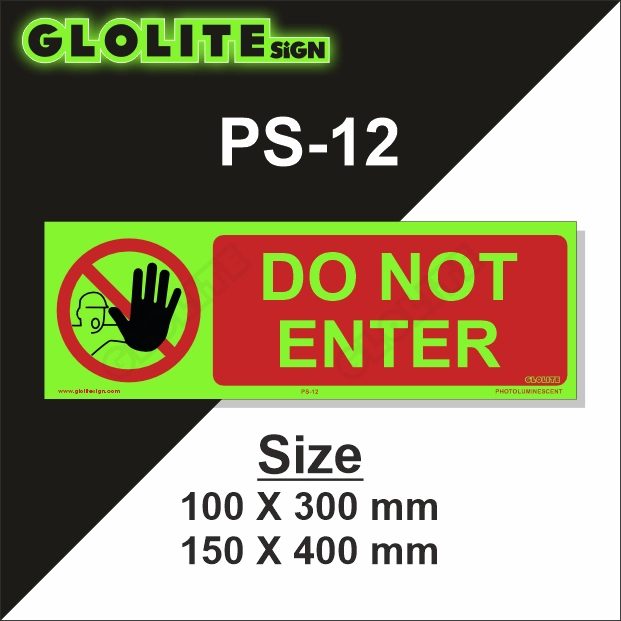
Do Not Enter Sign
The Do Not Enter PS-12 photoluminescent signage is an essential safety tool designed to restrict entry into dangerous, sensitive, or unauthorized areas. Its commanding message ensures that individuals are immediately alerted to boundary limitations, thereby reducing the chances of accidents, security breaches, or operational disruptions. The sign glows brightly in low-light and blackout conditions, ensuring continuous visibility and compliance with safety protocols even during emergencies. Whether it's used in industrial, commercial, or institutional environments, this sign effectively communicates a strong and non-negotiable restriction that helps maintain order and safety.
Key Features:
Crafted using high-quality photoluminescent materials, the PS-12 signage stores ambient light and emits a luminous glow in dark conditions without the need for batteries or electricity. The sign features bold typography and a universally recognized "Do Not Enter" symbol, making it instantly understandable regardless of language barriers. It is resistant to moisture, UV rays, chemicals, and physical damage, allowing it to perform in both indoor and outdoor settings. Easy to mount on doors, walls, barricades, or equipment, it supports compliance with OSHA and ISO regulations, reinforcing safety across all operational areas.
Applications:
The Do Not Enter PS-12 sign is suitable for restricted zones in factories, construction sites, server rooms, electrical panels, laboratories, and private offices. It's also frequently installed in public areas such as shopping malls, schools, hospitals, airports, and entertainment venues to control access during emergencies, maintenance, or events. In the event of a power failure or evacuation, its glowing display remains visible, directing individuals away from potential hazards or non-permitted spaces. By clearly marking no-entry zones, organizations can ensure the safety of both their personnel and the general public while promoting efficient crowd management and risk prevention.

